
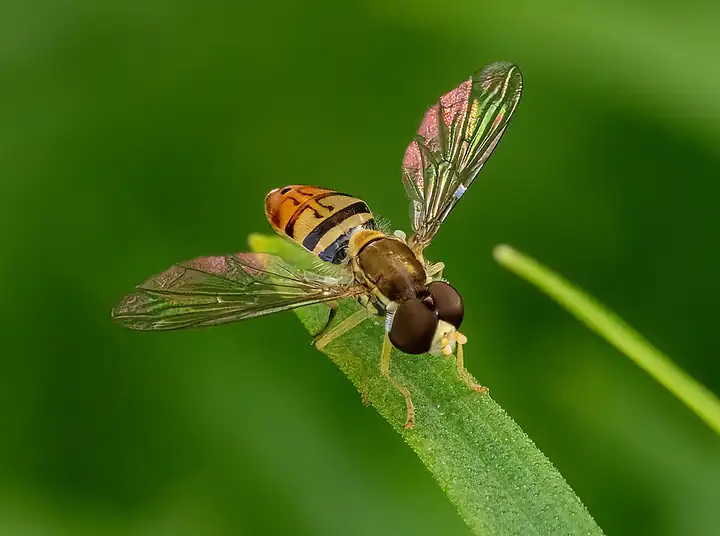
Syrphid flies (hover flies, flower flies)
Family Syrphidae; common garden aphid hunters include Toxomerus, Syrphus, Allograpta and Eupeodes species
| Type | Insect |
|---|---|
| What it does | Predator, Pollinator |
| How common it is by region | Very common here: Northeast, Southeast, South Central, Midwest, Great Plains, Mountain West, Southwest, Pacific Northwest, California |
About
Hover flies are striped flies that look a lot like small bees or wasps and hang in the air over flowers. Their larvae are some of the best aphid hunters in the garden, and the adults pollinate as they feed.
This one is already on your side. Broad sprays kill it along with the pest, which is why the guide puts sprays last.
What it eats
The larvae hunt aphids, and also take thrips, small caterpillars and other small soft insects; Wisconsin Extension says one larva can eat up to 400 aphids while it grows. Adults sip nectar and eat pollen.
Pests it goes after
Aphids, Corn earworm (tomato fruitworm), European corn borer, Thrips
Spotting it
How to find it early
Look for small black-and-yellow flies hovering in place over flowers, then darting off. Unlike bees and wasps they have only one pair of wings, big eyes and very short antennae.
Its young
Eggs are tiny, white and shaped like a grain of rice, laid one by one near aphid colonies. The larvae are legless, slug-like maggots in cream, green or brown, narrow at the head end, and they crawl over leaves among the aphids.
When
Spring through fall; most noticeable in the second half of summer once aphids are plentiful
Easy to mistake for
- Honey bee — Hover flies have one pair of wings, huge eyes and stubby antennae, and they hover in place; bees have two pairs of wings, longer antennae and fuzzier bodies.
- Yellowjackets (and baldfaced hornets) — Hover flies have a fly's big eyes, short antennae and one pair of wings, and they cannot sting; yellowjackets have long antennae, two pairs of wings and a pinched waist.
Bringing more of them in
Grow small-flowered herbs and flowers that bloom all season, especially flat clusters of tiny white flowers, and let some cilantro and dill bloom. Tolerate a few aphids and skip broad-spectrum sprays so the larvae have food and survive.
Plants that bring it in
How common it is by region
| Northeast | Very common here |
|---|---|
| Southeast | Very common here |
| South Central | Very common here |
| Midwest | Very common here |
| Great Plains | Very common here |
| Mountain West | Very common here |
| Southwest | Very common here |
| Pacific Northwest | Very common here |
| California | Very common here |
| Alaska | Common here |
| Hawaii | Common here |
Sources
Photo: Photo: Rhododendrites / Wikimedia Commons, CC BY-SA 4.0 (CC BY-SA 4.0). Photo resized for the web.

Planting dates and advice are general guidance; check with your local Cooperative Extension office for your area.