
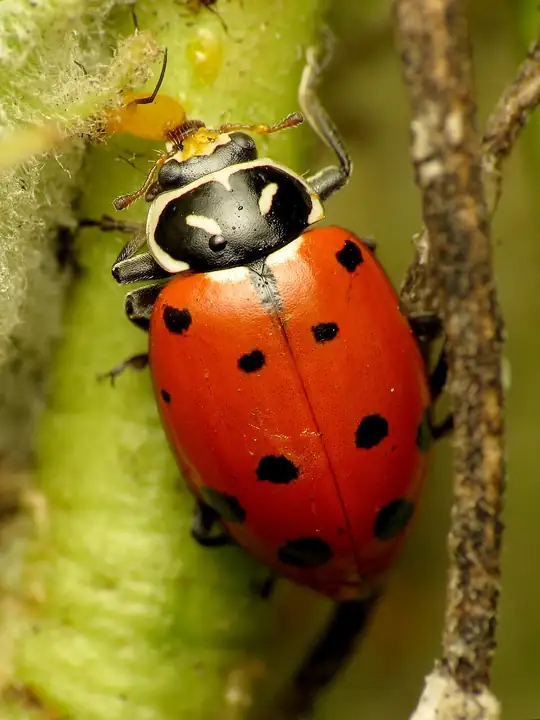
Lady beetles (ladybugs)
Family Coccinellidae; common garden species include the convergent lady beetle (Hippodamia convergens), the multicolored Asian lady beetle (Harmonia axyridis) and the sevenspotted lady beetle (Coccinella septempunctata), plus tiny specialists such as the spider mite destroyer (Stethorus) and the mealybug destroyer (Cryptolaemus montrouzieri)
| Type | Insect |
|---|---|
| What it does | Predator |
| When | Spring through fall; adults spend the winter in sheltered groups. |
| How common it is by region | Very common here: Northeast, Southeast, South Central, Midwest, Great Plains, Mountain West, Southwest, Pacific Northwest, California |
About
Lady beetles are small, dome-shaped beetles, often red or orange with black spots, and both the adults and the larvae hunt soft-bodied pests. Aphids are their favorite food, which makes them one of the most useful insects a vegetable or flower gardener can have.
This one is already on your side. Broad sprays kill it along with the pest, which is why the guide puts sprays last.
What it eats
Mostly aphids, plus scale insects, psyllids, insect eggs and other soft-bodied insects; UC IPM says an adult multicolored Asian lady beetle can eat more than 100 aphids a day. A few kinds specialize: the tiny black spider mite destroyer eats spider mites, and the mealybug destroyer eats mealybugs.
Pests it goes after
Spotting it
How to find it early
Look for shiny, rounded beetles about a quarter inch long on plants with aphids; the convergent lady beetle is orange with up to 13 black spots and two white slanted marks on a black thorax. The multicolored Asian lady beetle varies from yellow-orange to red, with or without spots, and usually shows a black M or W shape on its white 'collar.'
Its young
The larvae look like tiny, spiny alligators, blackish or dark gray with orange or yellow marks, and they grow to about a quarter inch. Eggs are small yellow ovals stood on end in clusters of 10 to 30 under leaves, and the pupae are orange-and-black bumps glued to leaves.
When
Spring through fall; adults spend the winter in sheltered groups.
Easy to mistake for
- Mexican bean beetle — The Mexican bean beetle is a coppery lady beetle with 8 spots on each wing cover, and both it and its spiny yellow larvae chew bean leaves instead of eating insects.
- Mealybugs — Mealybug destroyer larvae are covered in white wax like mealybugs, but they are more than twice as big, move faster, have long wax threads on the top and sides, and show real legs and jaws when you brush the wax off.
Bringing more of them in
Let a few aphids stay so lady beetles have a reason to stay and lay eggs, and skip insecticides, which kill them too. Grow open, shallow flowers such as yarrow, blanket flower, dill, fennel and cilantro for the nectar and pollen adults also eat.
Plants that bring it in
Blanket flower (gaillardia), Cilantro (coriander), Dill, Fennel, Milkweed, Penstemon (beardtongue), Veronica (speedwell), Yarrow
Buying it
Not worth it: store-bought lady beetles are gathered from wild winter roosts and UC IPM says most fly away within a day or two of release; the Xerces Society adds that they can carry parasites and disease to wild lady beetles.
Worth knowing
In fall the multicolored Asian lady beetle gathers on sunny house walls and creeps into attics, walls and living spaces for the winter. Penn State notes it occasionally bites (anywhere from annoying to painful), leaves smelly yellow stains, and has been linked to allergies and asthma in some people; vacuum indoor beetles and seal cracks, since bug bombs and wall-void sprays don't help. Pets that eat them can get mouth burns.
How common it is by region
| Northeast | Very common here |
|---|---|
| Southeast | Very common here |
| South Central | Very common here |
| Midwest | Very common here |
| Great Plains | Very common here |
| Mountain West | Very common here |
| Southwest | Very common here |
| Pacific Northwest | Very common here |
| California | Very common here |
| Alaska | Common here |
| Hawaii | Common here |
Sources
- ipm.ucanr.edu
- ipm.ucanr.edu
- ipm.ucanr.edu
- ipm.ucanr.edu
- extension.psu.edu
- xerces.org
- extension.illinois.edu
- ipm-cahnr.media.uconn.edu
Photo: Photo: Katja Schulz / Wikimedia Commons, CC BY 2.0 (CC BY 2.0). Photo resized for the web.

Planting dates and advice are general guidance; check with your local Cooperative Extension office for your area.