
Yew
Taxus x media (Anglo-Japanese or foundation yew), T. cuspidata (Japanese yew), T. baccata (English yew) · Yew family (Taxaceae)
| Hardiness zones | 4 to 7 |
|---|---|
| Sun | full sun to part shade |
| Water | moderate |
| Life cycle | perennial |
| Frost | Hardy: takes frost |
About Yew
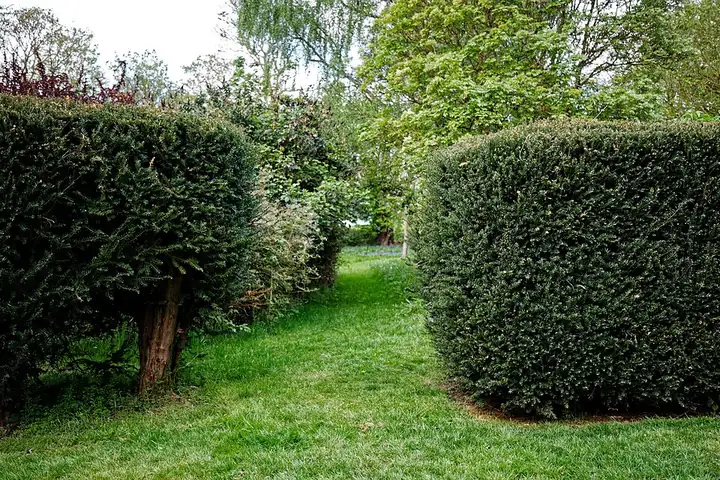
Yews are dark green, needled evergreens used for hedges, foundation plantings and topiary, because they take shearing well and grow in sun or shade. Foundation yew is a hybrid of English and Japanese yew made in Massachusetts in the early 1900s (NC State). The leaves, bark and seeds are highly poisonous to people, pets and livestock, so think about where children, dogs or horses spend time.
Foundation yew and Japanese yew are hardy in zones 4-7 (NC State, Morton Arboretum). Drying winter winds and reflected sun can brown the needles.
Planting
Mulch over the shallow roots and water well in fall before the ground freezes (Morton Arboretum).
Soil
Moist, well-drained soil rich in organic matter; yews will not tolerate wet soil and get root rot there (Morton Arboretum, NC State).
Test the soil before planting; mature shrubs in decent soil need little or no fertilizer (Clemson).
Feeding
- Spring to early summer after new growth starts, only if a soil test shows a need: slow-release complete fertilizer in a 3:1:2 ratio, or what the soil test calls for. Spread evenly from the trunk out to the drip line and water it in; a typical soil-test rate for shrubs is about 2 lb of 12-6-6 per 100 sq ft (Clemson). Follow a soil test.
Look for: mostly nitrogen, in spring as growth starts. Spring feeding grows the new shoots and leaves that carry flowers and fruit; feeding after midsummer pushes soft growth that may not harden before winter.
Water is what new shrubs need most: daily for the first 2 weeks, every 2-3 days through week 12, then weekly until the roots spread (at least two growing seasons), using about a quarter to a third of the nursery pot's volume each time (UMN). Yews won't tolerate wet soil; mulch the shallow roots and water well in fall before the ground freezes (Morton Arboretum).
Varieties (11)
NC State and Morton Arboretum document these.
| Variety | Type | Zones | Notes |
|---|---|---|---|
| Brownii | Foundation yew | 4–7typical for yew | Male (no berries), 9-12 ft. Sources: [1] |
| Dark Green Spreader | Foundation yew | 4–7typical for yew | Dark green, 4-5 ft. Sources: [1] |
| Everlow | Foundation yew | 4–7typical for yew | Dwarf with a 5 ft spread. Sources: [1] |
| Hatfieldii | Foundation yew | 4–7typical for yew | Male, pyramidal to columnar, about 12 ft. Sources: [1] |
| Hicksii | Foundation yew | 4–7typical for yew | Upright, up to 20 ft; a common hedge yew. Sources: [1] |
| Sentinalis | Foundation yew | 4–7typical for yew | Narrow column to 12 ft. Sources: [1] |
| Tauntonii | Foundation yew | 4–7typical for yew | Dense, spreading, 3-4 ft tall. Sources: [1] |
| Wardii | Foundation yew | 4–7typical for yew | Slow, 4 ft tall and 8 ft wide. Sources: [1] |
| Densiformis | Foundation yew (T. x media) | 4–7typical for yew | Semi-dwarf, 3-4 ft tall. Sources: [1] |
| Fastigiata (Captain yew) | Japanese yew | 4–7typical for yew | Pyramidal, 8-10 ft tall and 4-5 ft wide; grows larger and looser if unpruned. Sources: [2] |
| Capitata (upright yew) | Japanese yew (T. cuspidata) | 4–7typical for yew | The tree form of Japanese yew, 25-30 ft tall. Sources: [2] |
Pests to watch for
Diseases and problems
Root rot, Needle and twig blight, Winter injury, Drought stress, Edema (oedema), Dog urine damage, Normal needle drop
In the kitchen
Safety: NC State rates yew poisoning as high severity: the alkaloid taxine in the leaves, bark and seeds can cause trembling, a slow pulse, trouble breathing, vomiting, convulsions and death. Keep children from eating the seeds inside the red berries.
Pets: Deadly to dogs, cats and horses (ASPCA): taxine can cause sudden death from heart failure; early signs in dogs are muscle tremors, trouble breathing and seizures.
Sources
Photo: Photo: Acabashi / Wikimedia Commons, CC BY-SA 4.0 (CC BY-SA 4.0). Photo resized for the web.

Planting dates and advice are general guidance; check with your local Cooperative Extension office for your area.