
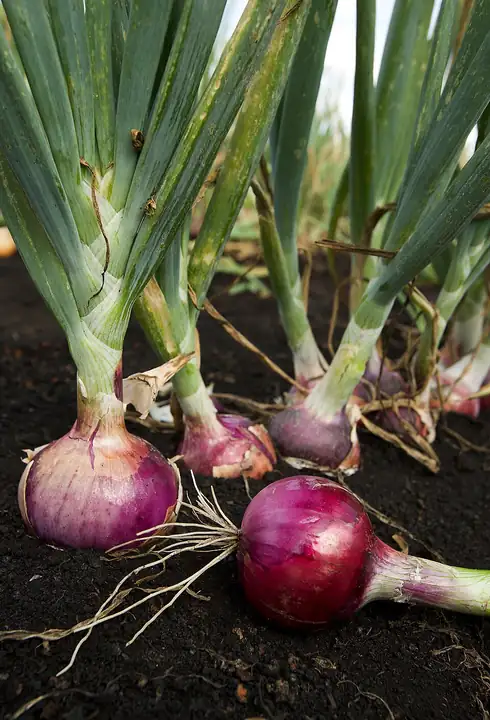
Onion
Allium cepa · Amaryllis family (Amaryllidaceae)
When to plant: Start seeds indoors 12 to 14 weeks before the last frost, set out plants 2 to 4 weeks before the last frost and sow seeds outdoors 2 to 4 weeks before the last frost.
| Hardiness zones | 2 to 11 |
|---|---|
| Sun | full sun |
| Water | moderate |
| Life cycle | biennial |
| Frost | Hardy: takes frost |
| Soil pH | 6.0–7.0 |
| Spacing | 3 to 4 inches |
| Days to harvest | 90 to 120 days |
| Soil temperature to plant | at least 35°F |
About Onion
Onions are grown from seed, transplants or small sets and are one of the first crops planted in spring. Bulbing is triggered by day length, so choose long-day types in the North and short-day types in the South.
Grown as a cool-season annual in every zone; match long-day varieties to the North and short-day varieties to the South.
When to plant
Timing is counted from your average last spring frost (and first fall frost). Sow & Tell works out the actual dates for your ZIP code.
- Start seeds indoors: 12 to 14 weeks before the last frost
- Set out plants: 2 to 4 weeks before the last frost
- Sow seeds outdoors: 2 to 4 weeks before the last frost
Days count from planting for bulb onions; green onions are ready in about 50 days from seed. Seed started indoors needs 8 to 12 weeks before it goes out; sets and transplants go in as soon as the soil can be worked.
Soil
Well-drained, fertile soil high in organic matter, kept evenly moist.
Follow a soil test and keep pH about 6.0 to 7.0; work in up to 1 inch of compost, and without a test add about 1 lb of balanced fertilizer such as 10-10-10 per 100 sq ft into the top 6 inches.
Feeding
- 2 to 4 weeks after planting, once roots are well grown: nitrogen fertilizer such as 21-0-0. Spread about 3/4 lb (about 1 1/2 cups) per 100 ft of row about 6 inches from the plants, scratch it in and water.
Look for: nitrogen, such as 21-0-0. Strong green tops feed the bulb, so these crops get nitrogen while the leaves grow; follow the timing in each step, since feeding too late makes bulbs form late. - 1 to 2 weeks after the bulbs start to swell: fertilizer such as 5-10-10. Spread about 1 1/4 lb per 100 sq ft beside the row, about 6 inches from the plants, and water it in; stop feeding by midsummer.
Look for: nitrogen, such as 21-0-0. Strong green tops feed the bulb, so these crops get nitrogen while the leaves grow; follow the timing in each step, since feeding too late makes bulbs form late.
Too much nitrogen, or feeding late in summer, gives late bulbs with thick necks that are soft and store poorly.
Harvest
Pull bulbs when about half the tops have fallen over and dried. Cure them in a warm (75 to 90F), airy spot for 2 to 4 weeks until the necks are tight and the outer skins papery.
Pull bulbs once, when about half the tops have fallen over and dried, then cure them 2 to 4 weeks in a warm, airy spot.
Varieties (41)
| Variety | Type | Season and days | Notes |
|---|---|---|---|
| Beltsville Bunching | Bunching (non-bulbing) | Vigorous bunching onion bred for green onions. Listed with resistance to pink root, yellow dwarf, smut and thrips. Sources: [7][9][10] | |
| Evergreen White Bunching | Bunching (non-bulbing) | Spring to fall · 65 days | Does not form a bulb; makes clusters of slim white stalks. Very cold hardy and can overwinter. Day length does not matter for bunching onions, so they grow anywhere. Harvest the whole plant, roots to tops. Sources: [2][7][11][12][13][14] |
| Parade | Bunching (non-bulbing) | 120 days | Bunching onion for green onions. Sources: [15] |
| Cabernet | Intermediate-day | Intermediate-day onion recommended for Georgia. Sources: [16] | |
| Super Star | Intermediate-day (day-neutral), white sweet | Sweet. White sweet onion. Oregon State Master Gardeners call it day-neutral; Texas A&M lists it as intermediate-day. Intermediate-day onion: bulbs with about 12 to 14 hours of daylight and suits the middle latitudes of the U.S. Sources: [12][13][14][17][18][19] | |
| Candy | Intermediate-day (day-neutral), yellow sweet | Sweet. Yellow sweet onion. Sources classify it differently: intermediate/day-neutral (Oregon State Master Gardeners), long-day (Texas A&M) or short-day (Clemson). Recommended in places as different as South Carolina, Utah and Wisconsin; Utah says its bulb onions store 2 to 4 months. Sources: [2][7][13][14][17][18][19] | |
| Sierra Blanca | Intermediate-day, white | 100 days | White onion listed as resistant to pink root. Kentucky's list spells it Siera Blanca. Sources: [15][16] |
| Cimarron | Intermediate-day, yellow | Intermediate-day onion: bulbs with about 12 to 14 hours of daylight and suits the middle latitudes of the U.S. In southern New Mexico it is usually grown from transplants to get bigger bulbs. Sources: [13][19][20][21] | |
| Yula | Intermediate-day, yellow | 103 days | Texas A&M classes it as intermediate-day; North Carolina State lists it with long-day types. Intermediate-day onion: bulbs with about 12 to 14 hours of daylight and suits the middle latitudes of the U.S. Sources: [12][13][19][20][22] |
| Red Bull | Long-day, red | Late summer | Long-day onion: needs about 14 to 16 hours of daylight to bulb, so it suits the northern U.S. In the Deep South it may never get the signal to bulb. Sources: [17][18] |
| Southport Red Globe | Long-day, red | Late summer | Red globe onion. Long-day onion: needs about 14 to 16 hours of daylight to bulb, so it suits the northern U.S. In the Deep South it may never get the signal to bulb. Sources: [23] |
| Redwing | Long-day, red storage | Late summer | Red onion. Long-day onion: needs about 14 to 16 hours of daylight to bulb, so it suits the northern U.S. In the Deep South it may never get the signal to bulb. Sources: [17][18] |
| White Sweet Spanish | Long-day, white | Late summer | Large white bulb. Long-day onion: needs about 14 to 16 hours of daylight to bulb, so it suits the northern U.S. In the Deep South it may never get the signal to bulb. Sources: [13][20][23] |
| Ailsa Craig | Long-day, yellow | Late summer | Yellow onion; Wisconsin lists it as Ailsa Craig Exhibition. Long-day onion: needs about 14 to 16 hours of daylight to bulb, so it suits the northern U.S. In the Deep South it may never get the signal to bulb. Sources: [17][18] |
| Yellow Sweet Spanish | Long-day, yellow | Late summer | Large yellow bulb. Long-day onion: needs about 14 to 16 hours of daylight to bulb, so it suits the northern U.S. In the Deep South it may never get the signal to bulb. Utah recommends a local strain, Utah Sweet Spanish. Sources: [2][13][14][18][23] |
| Copra | Long-day, yellow storage | Late summer | Yellow storage onion. Long-day onion: needs about 14 to 16 hours of daylight to bulb, so it suits the northern U.S. In the Deep South it may never get the signal to bulb. Long-day storage onions like this one keep well after curing. Sources: [14][17][18][24] |
| First Edition | Long-day, yellow storage | Late summer | Flavor improves with cooking. High-yielding, with uniform globe bulbs and creamy-yellow flesh. Long-day onion: needs about 14 to 16 hours of daylight to bulb, so it suits the northern U.S. In the Deep South it may never get the signal to bulb. Bred for northern and northeastern gardens and keeps well in storage. Sources: [14][18][24] |
| Patterson | Long-day, yellow storage | Late summer | Long-day onion: needs about 14 to 16 hours of daylight to bulb, so it suits the northern U.S. In the Deep South it may never get the signal to bulb. Sources: [17] |
| Walla Walla | Long-day, yellow sweet | Sweet and mild. Large yellow sweet onion from Washington State. Long-day onion: needs about 14 to 16 hours of daylight to bulb, so it suits northern states. Unlike most long-day onions it does not keep long, so use it fresh. Sources: [2][14][17][23][24] | |
| Burgermeister | Red | 110 days | Large red onion. Wisconsin's list names it Red Burgermaster. Sources: [15][18] |
| Red Candy Apple | Red | 95 days | Red onion recommended for Kentucky gardens. Sources: [15] |
| Rossa di Milano | Red | Red onion that germinated well, matured early and yielded well in North Dakota trials. Sources: [25][26] | |
| Southern Belle | Red | 110 days | Red bulbing onion grown from transplants in Central Texas. Sources: [27] |
| Mars | Red storage (northern) | Late summer | Red storage onion. On Wisconsin's recommended list; Wisconsin gardens grow long-day onions. Sources: [14][18] |
| Red Burgundy | Short-day, red | 110 days | Sweet. Large red bulb. Short-day onion: bulbs with about 10 to 12 hours of daylight, so it suits the far South, where onions are planted in fall or winter. In the North it tends to bulb early and stay small. A good pick for southern gardeners who want a red onion. Sources: [11][12][13][19][20][22][23] |
| Red Creole | Short-day, red | Short-day red onion recommended for Georgia. Sources: [16] | |
| Contessa | Short-day, white | Early | Open-pollinated short-day onion with large, white, deep-globe bulbs. Tolerates pink root and resists bolting. Sources: [9] |
| Crystal Wax (White) | Short-day, white | Early · 60 days | Soft, mild white flesh. Flat, medium-size bulb with white skin and flesh. Short-day onion: bulbs with about 10 to 12 hours of daylight, so it suits the far South, where onions are planted in fall or winter. In the North it tends to bulb early and stay small. Also used for green onions and, picked small, for pickling. Sources: [2][12][19][20][22][23][28] |
| Eclipse | Short-day, white | 80 days | White short-day onion recommended in Texas. Sources: [12][13] |
| Texas Early White | Short-day, white | Late spring (from fall planting in NM) | White, top-shaped bulb. Short-day onion: bulbs with about 10 to 12 hours of daylight, so it suits the far South, where onions are planted in fall or winter. In the North it tends to bulb early and stay small. Matures in late May from fall planting in southern New Mexico. Sources: [19][20][22][23][29] |
| White Bermuda | Short-day, white | 95 days | Short-day white onion. Sources: [23][27] |
| White Granex | Short-day, white sweet | Early | Mild and sweet. Flattened bulb with pearly-white flesh; the white version of Yellow Granex. Short-day onion: bulbs with about 10 to 12 hours of daylight, so it suits the far South, where onions are planted in fall or winter. In the North it tends to bulb early and stay small. Does not store well. Sources: [7][19][22][23][30] |
| Texas Early Grano 502 | Short-day, yellow | Early · 80 days | Sweet. Large yellow bulb; the PRR strain resists pink root. Can also be pulled young as a green onion. Short-day onion: bulbs with about 10 to 12 hours of daylight, so it suits the far South, where onions are planted in fall or winter. In the North it tends to bulb early and stay small. Sources: [7][11][12][19][20][22][23] |
| Granex 429 | Short-day, yellow sweet | 125 days | Mild and sweet. Hybrid with a flat, yellow-skinned bulb and white flesh. Tolerates some races of pink root. Sources: [9][31] |
| NuMex Sweetpak | Short-day, yellow sweet | Late May (southern NM) | Low pungency (sweet). Firm, globe to flat-globe yellow bulb with light brown skin; good pink root resistance. Short-day onion: bulbs with about 10 to 12 hours of daylight, so it suits the far South, where onions are planted in fall or winter. In the North it tends to bulb early and stay small. Released by New Mexico State University; best fall-seeded, since it makes small bulbs from transplants. Sources: [19][21][22][23][29][32] |
| Texas 1015Y (Texas SuperSweet) | Short-day, yellow sweet | Early summer (from fall planting) · 110 days | Sweet and mild. Large yellow globe. Resists pink root and keeps better than most short-day sweet onions. Short-day onion: bulbs with about 10 to 12 hours of daylight, so it suits the far South, where onions are planted in fall or winter. In the North it tends to bulb early and stay small. In New Mexico trials it bolted easily when sown directly in fall. Sources: [12][19][20][22][23][28][29][30] |
| Yellow Granex (Vidalia type) | Short-day, yellow sweet | Early (earliest short-day type) · 100 days | Very mild and sweet; best eaten raw. Thick, flattened yellow bulb; the classic Vidalia-style onion. Granex 33 is a common hybrid strain and is prone to pink root. Short-day onion: bulbs with about 10 to 12 hours of daylight, so it suits the far South, where onions are planted in fall or winter. In the North it tends to bulb early and stay small. Does not store well. Sources: [7][12][19][20][22][23][28][30] |
| Sweet Sandwich | Yellow | 100 to 115 days | Yellow onion recommended in Kentucky, Utah and Wisconsin. Sources: [15][18][33] |
| Talon | Yellow | Yellow onion that germinated quickly and was ready early in North Dakota trials. Sources: [25][26] | |
| Fiesta | Yellow, hybrid | 100 days | Hybrid bulb onion recommended for Utah. Sources: [33] |
| Ringmaster | 120 days | Bulb onion on the Texas A&M list for Northeast and East Texas. Sources: [12] |
Good neighbors
UMN Extension cites studies where onions planted with cabbage or broccoli helped reduce caterpillar damage; evidence is modest.
Pests to watch for
Onion maggot, Thrips, Leafminers, Grasshoppers, Eriophyid mites (rust, bud, blister and gall mites), Mole crickets, Allium leafminer, Garden symphylan, Beet armyworm, Seedcorn maggot
Diseases and problems
Neck rot, Fusarium basal rot, Pink root, Bacterial soft rot, Bolting (going to seed), Aster yellows, Purple blotch, Cucumber mosaic
In the kitchen
A base flavor for countless dishes, eaten raw, sauteed, roasted, grilled or pickled.
Keeping it: Cure bulbs 2 to 3 weeks, then keep them in a cool (50-60F), dry, airy place in mesh bags or braids for months; check often for soft ones. Sweet onions keep poorly, so use them first, and don't store onions with potatoes.
Pets: Toxic to dogs, cats and horses (ASPCA): contains N-propyl disulfide, which damages red blood cells and can cause vomiting, anemia, weakness and a fast heart rate.
Sources
- extension.umn.edu
- extension.usu.edu
- extension.unh.edu
- extension.colostate.edu
- extension.umn.edu
- aspca.org
- hgic.clemson.edu
- riley.k-state.edu
- cucurbitbreeding.wordpress.ncsu.edu
- agrilife.org
- aggie-hort.tamu.edu
- agrilifeextension.tamu.edu
- aggie-horticulture.tamu.edu
- hort.extension.wisc.edu
- publications.mgcafe.uky.edu
- fieldreport.caes.uga.edu
- douglascountymg.org
- florence.extension.wisc.edu
- uaex.uada.edu
- aggie-horticulture.tamu.edu
- pubs.nmsu.edu
- content.ces.ncsu.edu
- extension.illinois.edu
- aggie-hort.tamu.edu
- ndsu.edu
- ndsu.edu
- agrilifeextension.tamu.edu
- extension.msstate.edu
- pubs.nmsu.edu
- aggie-hort.tamu.edu
- extension.msstate.edu
- pubs.nmsu.edu
- extension.usu.edu
Photo: Photo: Stephen Ausmus, USDA ARS, Public domain (USDA ARS), via Wikimedia Commons. Photo resized for the web.

Planting dates and advice are general guidance; check with your local Cooperative Extension office for your area.