
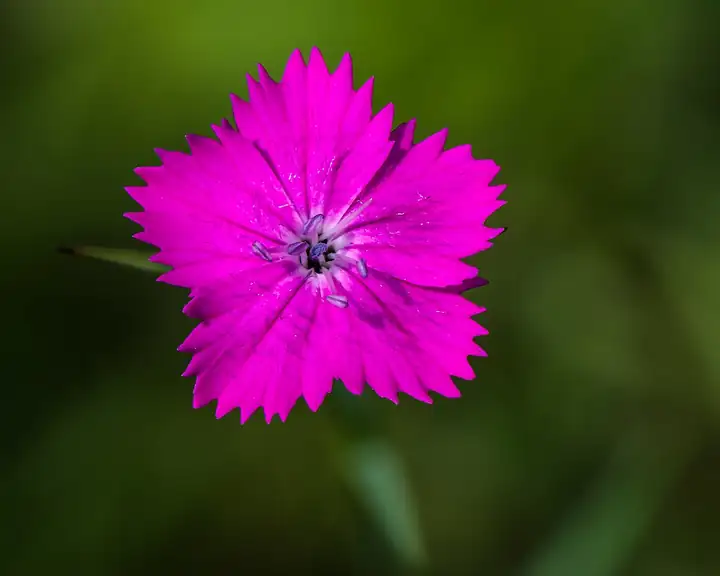
Dianthus (pinks, sweet William, carnation)
Dianthus spp. (D. plumarius, D. gratianopolitanus, D. deltoides, D. barbatus, D. caryophyllus and hybrids) · Pink family (Caryophyllaceae)
When to plant: Divide perennial pinks every 2-3 years or when the center dies out, best in early spring (Wisconsin; NC State).
| Hardiness zones | 3 to 9 |
|---|---|
| Sun | full sun |
| Water | low |
| Life cycle | perennial |
| Frost | Hardy: takes frost |
| Soil pH | 6.0–8.0 |
About Dianthus (pinks, sweet William, carnation)
Dianthus is a big group: low, clove-scented pinks, sweet William (a biennial or short-lived perennial) and the taller carnation. Most have gray-green, grassy leaves and fringed flowers in pink, red, white and purple, loved by bees and butterflies. Newer hybrids such as 'Jolt Pink' bloom from spring to frost and handle summer heat.
Pinks and sweet William are hardy in zones 3-9, carnations only in 6-9; many hybrid bedding types are grown as annuals.
When to plant
Divide perennial pinks every 2-3 years or when the center dies out, best in early spring (Wisconsin; NC State).
Grow from seed, cuttings, layering or division (NC State). Sweet William usually flowers its second year from seed.
Soil
Well-drained soil that is neutral to slightly alkaline; poor drainage leads to crown rot (NC State, Wisconsin).
Follow a soil test; dianthus likes well-drained, neutral to slightly alkaline soil, so add lime only if the test calls for it (NC State; Clemson).
Feeding
- early spring, before new growth starts: slow-release complete fertilizer such as 12-6-6. Scatter 1-2 lb per 100 sq ft and water it in (Clemson).
Look for: a balanced or all-purpose fertilizer at the label rate. Skip high-phosphorus "bloom boosters" unless a soil test shows low phosphorus: most garden soils already have enough, and the extra can wash into streams.
Soggy soil and crowding lead to crown and root rot (NC State).
Harvest
Pinks bloom from May to July, carnations in midsummer, and newer hybrids from spring to frost. Deadhead or shear after the first flush for repeat bloom (NC State, Wisconsin).
Varieties (29)
| Variety | Type | Season and days | Zones | Notes |
|---|---|---|---|---|
| Bath's Pink | Cheddar pink (D. gratianopolitanus) | Mid to late spring | 3–8 | Low 6-8 in mat of blue-gray leaves with fragrant pink flowers; spreads 2-2.5 ft. Handles heat, humidity and drought better than most dianthus. Sources: [1][7] |
| Firewitch | Cheddar pink (D. gratianopolitanus) | 3–9typical for dianthus | Fragrant magenta-pink flowers over compact silvery foliage. Sources: [4] | |
| Birmingham | Cottage pink (D. plumarius) | 3–9typical for dianthus | Compact plant with dense bloom. Sources: [6] | |
| Constant Beauty Crush Rose | Hybrid | 3–9typical for dianthus | A named dianthus in NC State's plant toolbox. Sources: [1] | |
| Ideal Violet | Hybrid | 3–9typical for dianthus | Violet flowers. 1992 All-America Selections bedding plant winner. Sources: [12] | |
| Vivid Bright Light | Hybrid | 3–9typical for dianthus | A named dianthus in NC State's plant toolbox. Sources: [1] | |
| American Pie Bumbleberry Pie | Hybrid pink | 3–9typical for dianthus | A named dianthus in NC State's plant toolbox. Sources: [1] | |
| Capitan Magnifica | Interspecific hybrid | 3–9typical for dianthus | Pink-and-white bicolor flowers. 2025 All-America Selections ornamental winner. Sources: [13] | |
| Supra Cherry Picotee | Interspecific hybrid | 3–9typical for dianthus | Cherry-centered flowers with pale edges. 2026 All-America Selections ornamental winner. Sources: [14] | |
| Supra Pink | Interspecific hybrid | 3–9typical for dianthus | Mottled pink, frilly flowers. All-America Selections winner. Sources: [15] | |
| Amazon Neon Cherry | Interspecific hybrid (D. barbatus type) | Fall planting for winter and spring color in the South | 3–9typical for dianthus | Bright cherry-colored clusters on stems up to about 2 ft; sweetly fragrant and good for cutting. Amazon series: sweet William crossed with Chinese pinks (UGA). UGA grows the Amazon series as a cool-season annual planted in fall for winter and spring color; it may live two years in some places. Sources: [16] |
| Amazon Neon Duo | Interspecific hybrid (D. barbatus type) | First summer from a late-winter sowing; harvest window of 3 months or more | 3–9typical for dianthus | Bright cherry-red and purple clusters on the same plant; stems up to about 2 ft (17-in average in NC State's 2002 trial), large heads, glossy dark leaves that turn burgundy in cold, light fragrance and long vase life. A cross of sweet William and Chinese pinks (D. chinensis), introduced in 2002; the Amazon series won the 2008 Georgia Gold Medal for winter annuals (UGA). UGA grows the Amazon series as a cool-season annual planted in fall for winter and spring color; it may live two years in some places. Sources: [16][17] |
| Amazon Neon Purple | Interspecific hybrid (D. barbatus type) | Fall planting for winter and spring color in the South | 3–9typical for dianthus | Bright purple clusters on stems up to about 2 ft; sweetly fragrant and good for cutting. Amazon series: sweet William crossed with Chinese pinks (UGA). UGA grows the Amazon series as a cool-season annual planted in fall for winter and spring color; it may live two years in some places. Sources: [16] |
| Amazon Rose Magic | Interspecific hybrid (D. barbatus type) | Fall planting for winter and spring color in the South | 3–9typical for dianthus | Each cluster mixes rose, pink, cherry and white florets; stems up to about 2 ft. Amazon series: sweet William crossed with Chinese pinks (UGA). UGA grows the Amazon series as a cool-season annual planted in fall for winter and spring color; it may live two years in some places. Sources: [16] |
| Bouquet Purple | Interspecific hybrid (D. barbatus type) | First summer from spring planting; long bloom, with repeat flushes after cutting back | 3–9typical for dianthus | Bright purple, lightly sweet-scented clusters on 16-in average stems; very productive (about 11 stems per plant) and easy from seed in NC State's 2001 cut-flower trial, where it was called the most promising cut flower of the year. About 7 days in the vase. UGA lists it with the Amazon series of sweet William hybrids. Trialers wintered plants under row cover and suggest fall planting may do even better. Sources: [16][18] |
| Jolt Pink | Interspecific hybrid (D. barbatus type) | 3–9typical for dianthus | Pink flowers. 2015 All-America Selections bedding plant winner. Sources: [1][19] | |
| Albus | Sweet William (D. barbatus) | 3–9typical for dianthus | Pure white flowers. Sweet William is a biennial or short-lived perennial that usually blooms its second year and then declines (USask, NC State). Sources: [2][20] | |
| Green Ball | Sweet William (D. barbatus) | 3–9typical for dianthus | Dense green, ball-shaped bracts used in arrangements. Sources: [2] | |
| Heart Attack | Sweet William (D. barbatus) | 3–9typical for dianthus | Dark blood-red flowers; tolerates heat and humidity well. Sources: [2] | |
| Homeland | Sweet William (D. barbatus) | 3–9typical for dianthus | Dark red flowers with a white eye. Sweet William is a biennial or short-lived perennial that usually blooms its second year and then declines (USask, NC State). Sources: [2][20] | |
| Newport Pink | Sweet William (D. barbatus) | 3–9typical for dianthus | Deep rose-pink flowers. Sweet William is a biennial or short-lived perennial that usually blooms its second year and then declines (USask, NC State). Sources: [2][20] | |
| Noverna | Sweet William (D. barbatus) | 3–9typical for dianthus | Vigorous plants that resist powdery mildew. Sweet William is a biennial or short-lived perennial that usually blooms its second year and then declines (USask, NC State). Sources: [2][18][20] | |
| Sooty | Sweet William (D. barbatus) | 3–9typical for dianthus | Very dark red, nearly black flowers, smaller than most. Sweet William is a biennial or short-lived perennial that usually blooms its second year and then declines (USask, NC State). Sources: [2][20] | |
| Sweet Coral | Sweet William (D. barbatus) | Early summer; about 2 weeks before Amazon Neon | 3–9typical for dianthus | Soft coral, fragrant flowers on 15-in average stems; heat tolerant, and the color fades fairly fast. About 10 days in the vase in NC State's 2004 trial. NC State's cut-flower trialers note sweet William is a biennial, but the Sweet series flowered strongly the first year from a late-winter sowing with no cold treatment. Sources: [21][22][23] |
| Sweet Purple | Sweet William (D. barbatus) | Early summer from a late-winter sowing; about 2 weeks before Amazon Neon | 3–9typical for dianthus | Vivid purple clusters over dark foliage on 15-in average stems (6-28 in); light fragrance; about 6 stems per plant and 9 days in the vase in NC State's 2004 trials. NC State's cut-flower trialers note sweet William is a biennial, but the Sweet series flowered strongly the first year from a late-winter sowing with no cold treatment. Part of PanAmerican Seed's Sweet series of cut-flower sweet Williams. Sources: [23][24] |
| Sweet Red | Sweet William (D. barbatus) | Early summer; late June-early July harvest from a February sowing | 3–9typical for dianthus | True dark red, fragrant, branching and productive, on 13-15-in stems; flowers can brown in hot sun. About 7-9 days in the vase in NC State's 2004-2005 trials. NC State's cut-flower trialers note sweet William is a biennial, but the Sweet series flowered strongly the first year from a late-winter sowing with no cold treatment. Sources: [23][25] |
| Sweet Scarlet | Sweet William (D. barbatus) | Summer, with heavy rebloom and a long harvest window | 3–9typical for dianthus | Muted scarlet-red that held up in sun better than 'Sweet Red', but stems were short; browned in rain and at 27 F frost in NC State's 2006 trial. Same PanAmerican Sweet series as 'Sweet Red'; NC State's trial page doesn't say how long it lives, though growers left plants in the field over winter to see if they would return. Sources: [23][26] |
| Sweet White | Sweet William (D. barbatus) | Early summer from a late-winter sowing | 3–9typical for dianthus | Clean bright white, fragrant clusters on 15-in average stems, a bit shorter than the red and purple Sweets; about 8 days in the vase in NC State's 2004 trials. A few plants came up pink. NC State's cut-flower trialers note sweet William is a biennial, but the Sweet series flowered strongly the first year from a late-winter sowing with no cold treatment. Sources: [22][23] |
| Wee Willie | Sweet William (D. barbatus) | 3–9typical for dianthus | Very dwarf, about 6 in tall; suited to containers. Usually grown as an annual (USask). Sweet William is a biennial or short-lived perennial that usually blooms its second year and then declines (USask, NC State). Sources: [2][20] |
Pests to watch for
Diseases and problems
In the kitchen
Petals are edible if grown without pesticides; the leaves are not (NC State).
Keeping it: Pick edible flowers the day you use them; if you must hold them, keep them in a plastic bag in the fridge for a day or so.
Safety: Leaves hold saponins that can cause mild stomach upset if eaten and brief skin irritation (NC State).
Pets: Toxic to dogs, cats and horses (ASPCA lists carnation, pinks and sweet William); NC State says signs are usually mild stomach upset and mild skin irritation.
Sources
- plants.ces.ncsu.edu
- plants.ces.ncsu.edu
- plants.ces.ncsu.edu
- plants.ces.ncsu.edu
- plants.ces.ncsu.edu
- plants.ces.ncsu.edu
- hort.extension.wisc.edu
- aspca.org
- aspca.org
- aspca.org
- hgic.clemson.edu
- all-americaselections.org
- all-americaselections.org
- all-americaselections.org
- all-americaselections.org
- fieldreport.caes.uga.edu
- cutflowers.ces.ncsu.edu
- cutflowers.ces.ncsu.edu
- all-americaselections.org
- gardening.usask.ca
- cutflowers.ces.ncsu.edu
- cutflowers.ces.ncsu.edu
- cutflowers.ces.ncsu.edu
- cutflowers.ces.ncsu.edu
- cutflowers.ces.ncsu.edu
- cutflowers.ces.ncsu.edu
Photo: Photo: Uoaei1, CC BY-SA 4.0, via Wikimedia Commons (CC BY-SA 4.0). Photo resized for the web.

Planting dates and advice are general guidance; check with your local Cooperative Extension office for your area.