
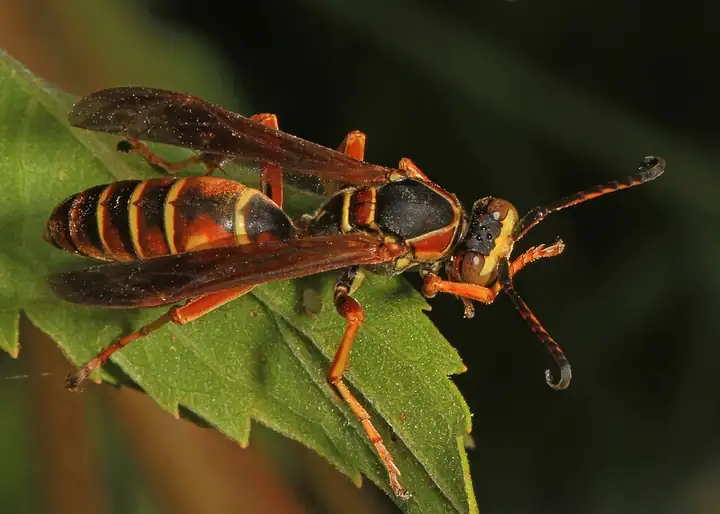
Paper wasps
Polistes species, including native paper wasps and the introduced European paper wasp (Polistes dominula)
| Type | Insect |
|---|---|
| What it does | Predator, Pollinator |
| How common it is by region | Very common here: Northeast, Southeast, South Central, Midwest, California |
About
Paper wasps are slender, long-legged wasps that build open, umbrella-shaped paper combs under eaves and branches. They hunt caterpillars to feed their young, so a nest away from doors is a real help in the garden.
This one is already on your side. Broad sprays kill it along with the pest, which is why the guide puts sprays last.
What it eats
Workers catch caterpillars such as imported cabbageworms, plus flies and crickets, and chew them up for their larvae. Adults also drink flower nectar.
Pests it goes after
Spotting it
How to find it early
Look for a 1/2- to 1-inch wasp, usually brown with yellow or red markings (the European paper wasp is black and yellow), flying with its long legs dangling. Nests are a single open comb hanging from a short stalk, rarely bigger than a hand.
Its young
Larvae are white grubs that stay in the open cells of the comb; you will see them only if you look up into a nest.
When
Queens start nests in spring; colonies peak in late summer and die at frost, when only new queens survive
Easy to mistake for
- Yellowjackets (and baldfaced hornets) — Paper wasps are slimmer with long dangling legs and build open combs with no cover; yellowjackets are stockier and shinier and hide their nests in covered paper balls, often underground.
Bringing more of them in
Leave nests that are away from doors, paths and play areas, and skip broad-spectrum sprays. A new nest in a bad spot can be knocked down early in spring before the colony grows.
Worth knowing
Females can sting more than once, and the sting hurts. They are much less defensive than yellowjackets and usually sting only when the nest is bumped, so trouble comes mostly from nests by doors or walkways. If you know you are allergic to stings, talk to your doctor about carrying epinephrine and do not deal with nests yourself; get emergency care for trouble breathing, throat swelling or dizziness after a sting.
How common it is by region
| Northeast | Very common here |
|---|---|
| Southeast | Very common here |
| South Central | Very common here |
| Midwest | Very common here |
| Great Plains | Common here |
| Mountain West | Common here |
| Southwest | Common here |
| Pacific Northwest | Common here |
| California | Very common here |
| Alaska | Occasional here |
| Hawaii | Common here |
Sources
Photo: Photo: Judy Gallagher / Wikimedia Commons, CC BY 2.0 (CC BY 2.0). Photo resized for the web.

Planting dates and advice are general guidance; check with your local Cooperative Extension office for your area.