
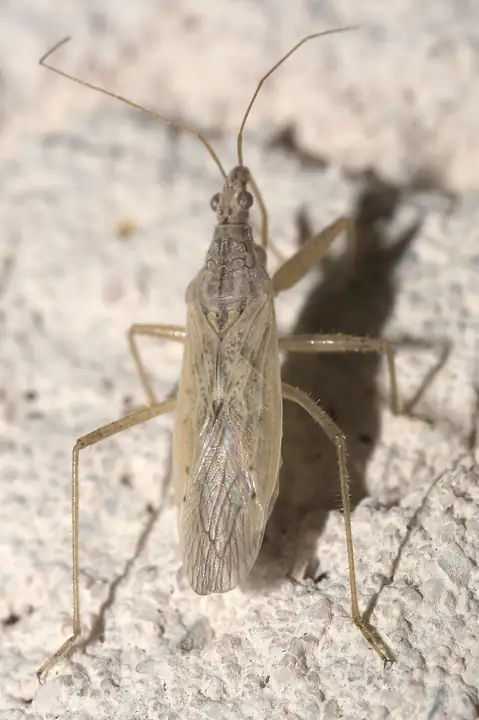
Damsel bugs
Family Nabidae; Nabis species such as the common damsel bug (N. americoferus), western damsel bug (N. alternatus) and N. roseipennis, the most common one in the Southeast
| Type | Insect |
|---|---|
| What it does | Predator |
| When | Spring through fall; adults spend the winter in sheltered spots. |
| How common it is by region | Very common here: Northeast, Southeast, South Central, Midwest, Great Plains, Mountain West, Southwest, Pacific Northwest, California |
About
Damsel bugs are slim, tan to gray true bugs with grasping front legs that hunt a wide range of garden pests. They are common in gardens and fields, and their occasional sips of plant juice do no harm.
This one is already on your side. Broad sprays kill it along with the pest, which is why the guide puts sprays last.
What it eats
Aphids, caterpillars, small beetles, mites, thrips and plant bugs such as Lygus, which they grab with their front legs and pierce with a curved beak. They sometimes take other natural enemies too.
Pests it goes after
Spotting it
How to find it early
Slender bugs about a sixth to half an inch long, tapering toward a small head with bulging eyes and long antennae. They run fast; look on low plants in gardens and fields.
Its young
Nymphs look like small, wingless adults, mottled brown and shaped a bit like an ice-cream cone; eggs are tucked inside soft stems with only a flat cap showing.
When
Spring through fall; adults spend the winter in sheltered spots.
Easy to mistake for
- Tarnished plant bug — Damsel bugs have many short, parallel veins at the wing tips and thickened front legs for grabbing prey; plant bugs have only one or two closed cells near the wing tip and ordinary front legs.
Bringing more of them in
Grow flowering plants nearby and avoid broad-spectrum insecticides.
Plants that bring it in
Cosmos, Fennel, Goldenrod, Mint
Buying it
Not sold; protect the ones that move in on their own.
Worth knowing
They eat other helpful insects now and then as well as pests.
How common it is by region
| Northeast | Very common here |
|---|---|
| Southeast | Very common here |
| South Central | Very common here |
| Midwest | Very common here |
| Great Plains | Very common here |
| Mountain West | Very common here |
| Southwest | Very common here |
| Pacific Northwest | Very common here |
| California | Very common here |
| Alaska | Occasional here |
| Hawaii | Occasional here |
Sources
Photo: Photo: xpda / Wikimedia Commons, CC BY-SA 4.0 (CC BY-SA 4.0). Photo resized for the web.

Planting dates and advice are general guidance; check with your local Cooperative Extension office for your area.