
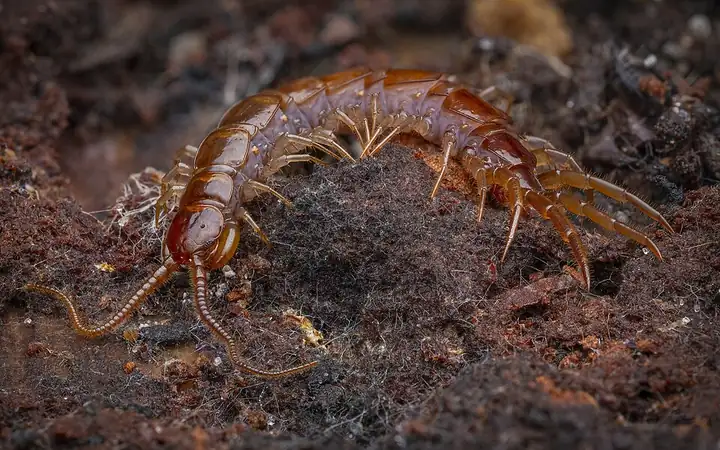
Centipedes
Class Chilopoda; garden species include stone centipedes (Lithobius) and soil centipedes, plus the house centipede (Scutigera coleoptrata) and, in Hawaii, the giant centipede (Scolopendra subspinipes)
| Type | Worm or other invertebrate |
|---|---|
| What it does | Predator |
| When | Active spring through fall; adults overwinter in sheltered, damp spots. |
| How common it is by region | Very common here: Hawaii |
About
Centipedes are flat, fast, many-legged hunters with one pair of legs on each body segment. They hide under stones, logs and mulch by day and hunt small creatures at night, and they don't harm plants.
This one is already on your side. Broad sprays kill it along with the pest, which is why the guide puts sprays last.
What it eats
Small insects and other small soil animals, which they grab with venomous jaws just behind the head. Large tropical centipedes also eat worms and slugs.
Pests it goes after
Spotting it
How to find it early
Lift a board, stone or patch of mulch and look for a flat, brown or yellowish creature that runs away quickly and never curls up. Count one pair of legs per segment (millipedes have two).
Its young
Eggs are laid in damp soil in spring and summer. Young centipedes look like small adults and in some species add legs as they grow; they take two to three years to mature.
When
Active spring through fall; adults overwinter in sheltered, damp spots.
Easy to mistake for
- Garden symphylan — Garden symphylans are tiny (under 1/4 inch), white, root-feeding relatives with 12 pairs of legs, while true centipedes are larger, brown or yellowish and hunt other animals.
- Millipedes — Centipedes are flat, fast and have one pair of legs per segment; millipedes are rounder, slow, have two pairs per segment and curl into a coil.
Bringing more of them in
Leave some stones, logs and mulch in garden beds and avoid broad-spectrum soil insecticides. To keep them out of the house, dry out damp basements and seal cracks.
Worth knowing
Don't pick them up. Most small garden centipedes can't break your skin, but large ones can give a painful bite, often compared to a bee sting, with swelling or numbness; people allergic to insect stings can react more strongly. In Hawaii the giant centipede's bite is extremely painful and has sent some people and pets to the hospital.
How common it is by region
| Northeast | Common here |
|---|---|
| Southeast | Common here |
| South Central | Common here |
| Midwest | Common here |
| Great Plains | Common here |
| Mountain West | Common here |
| Southwest | Common here |
| Pacific Northwest | Common here |
| California | Common here |
| Alaska | Occasional here |
| Hawaii | Very common here |
Sources
Photo: Photo: Alexis Tinker-Tsavalas / Wikimedia Commons, CC BY 4.0 (CC BY 4.0). Photo resized for the web.

Planting dates and advice are general guidance; check with your local Cooperative Extension office for your area.