
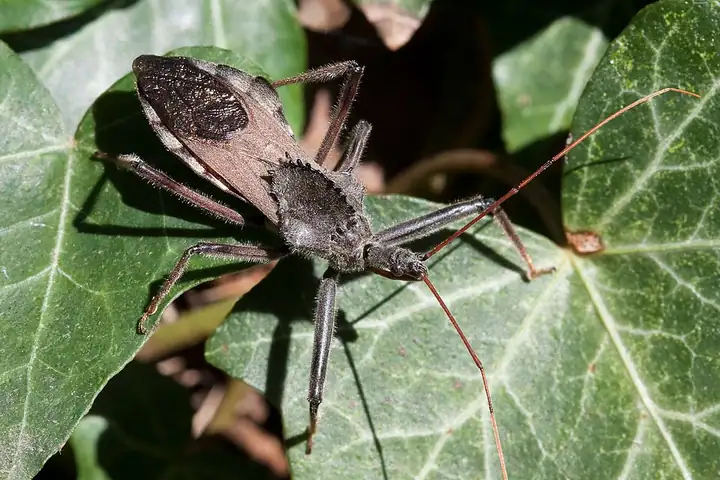
Assassin bugs (incl. the wheel bug)
Family Reduviidae; garden species include the wheel bug (Arilus cristatus), the largest North American assassin bug, leafhopper assassin bugs (Zelus) and Sinea species, plus ambush bugs that wait on flowers
| Type | Insect |
|---|---|
| What it does | Predator |
| When | Spring through fall; wheel bug adults mid-summer to fall. |
| How common it is by region | Very common here: Northeast, Southeast, South Central, Midwest, Great Plains, Mountain West, Southwest, Pacific Northwest, California |
About
Assassin bugs are long-legged, narrow-headed true bugs that stalk or ambush other insects and stab them with a stout beak. The big gray wheel bug, with a cog-like crest on its back, eats caterpillars, beetles and even brown marmorated stink bugs, but it can deliver a very painful bite.
This one is already on your side. Broad sprays kill it along with the pest, which is why the guide puts sprays last.
What it eats
Caterpillars, beetles and their larvae, sawfly larvae, aphids, grasshoppers and other true bugs, including stink bugs. They are general hunters, so they also catch bees, lacewings and lady beetles.
Pests it goes after
Spotting it
How to find it early
Look for long-legged bugs with a narrow head and a stout beak, waiting motionless on leaves or flowers for prey. The wheel bug is gray, about 1 to 1.5 inches long, with a toothed half-wheel on its back, and adults are most noticed in late summer and fall.
Its young
Wheel bug nymphs are small and red and black with long legs and no crest; their barrel-shaped eggs sit on end in glued clusters on twigs from fall to spring. Zelus eggs are dark brown with white caps in small groups on leaves.
When
Spring through fall; wheel bug adults mid-summer to fall.
Easy to mistake for
- Leaffooted bugs — Young Zelus assassin bug nymphs have pale legs and antennae, while young leaffooted bug nymphs have dark ones and later grow flat, leaf-like flares on the hind legs.
Bringing more of them in
Leave them be and avoid broad-spectrum sprays; they are rarely common enough to need control.
Worth knowing
Don't pick them up. The wheel bug isn't aggressive, but when handled it bites, and Illinois Extension compares the pain to a wasp or hornet sting, with numbness that can last days and a wound that heals slowly. Wash the bite and use a pain reliever; get medical help right away for hives, widespread swelling or trouble breathing. They also eat helpful insects, including honey bees.
How common it is by region
| Northeast | Very common here |
|---|---|
| Southeast | Very common here |
| South Central | Very common here |
| Midwest | Very common here |
| Great Plains | Very common here |
| Mountain West | Very common here |
| Southwest | Very common here |
| Pacific Northwest | Very common here |
| California | Very common here |
| Alaska | Occasional here |
| Hawaii | Occasional here |
Sources
Photo: Photo: Ryan Kaldari / Wikimedia Commons, Public domain. Photo resized for the web.

Planting dates and advice are general guidance; check with your local Cooperative Extension office for your area.